
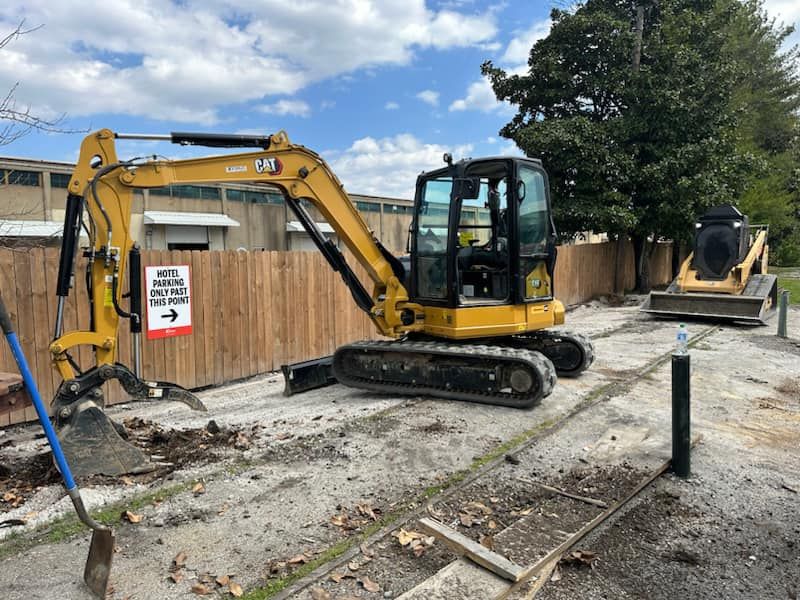
What happens if the excavation reveals rock or unsuitable soil?
If rock or unsuitable soil is encountered, Stanley Excavation and Grading works with your builder to determine the best solution, which may include removing the material, adjusting the foundation design, or compacting fill to create a stable base. These adjustments are made before concrete is poured so that your foundation remains structurally sound.
How long does foundation excavation take?
Most residential foundation excavations in Chattanooga are completed in one to two days, depending on the size of the home and site conditions. Weather, access, and the presence of underground utilities can affect timing, but the work is scheduled to keep your project moving forward without unnecessary delays.
Why does grading matter during foundation excavation?
Grading ensures that water flows away from your foundation rather than pooling around it. Even small differences in slope can cause drainage problems later, so the base is graded during excavation to prevent water from undermining the foundation or seeping into crawl spaces.
What if the excavation needs to happen during wet weather?
Stanley Excavation and Grading monitors weather conditions and schedules excavation during dry periods whenever possible. If rain occurs after the hole is dug, temporary drainage measures are put in place to keep the base dry until concrete is poured.
How does foundation excavation work for additions?
Excavation for additions is done carefully to avoid disturbing the existing foundation or underground utilities near the home. The new foundation is dug to match the depth and alignment of the original structure, which ensures that both sections settle evenly and tie together properly.